 Mon-Fri: 8:00AM – 5:00PM
 1650 E Algonquin Rd. Algonquin, IL 60102
 (847) 658-9500

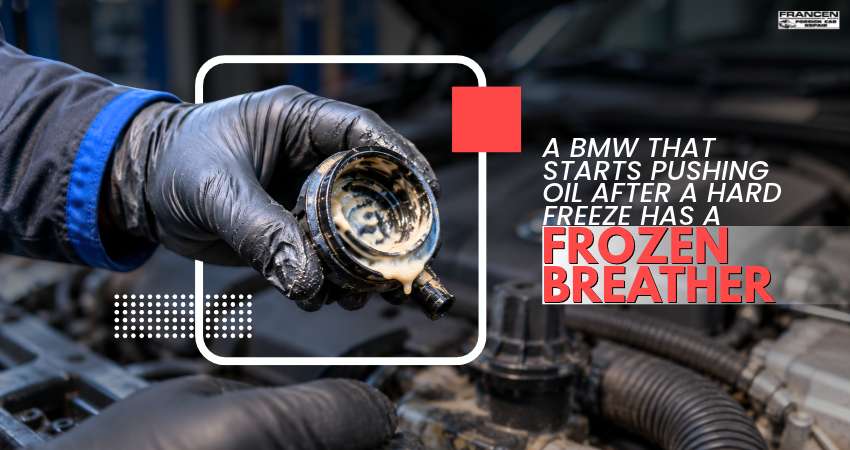
A car that suddenly starts pushing oil out of the dipstick tube, the oil filler cap or the rear of the engine after a run of hard freezes has usually not failed mechanically at all. It has nowhere to vent, and the pressure has to leave somewhere. Around Algonquin that is a January job, and it arrives without warning.
The mechanism is simple enough to explain at the counter and surprising enough that most owners have never heard of it. Blow-by gases carry water vapor into the crankcase. The crankcase ventilation system is supposed to pull that mixture back into the intake and burn it. When the hose that does the pulling is sitting in air well below freezing, the water condenses, then it freezes, and the passage closes.
What a blocked breather does to an engine
With the vent shut, every combustion stroke that leaks past the rings adds pressure to a sealed box. Crankcase pressure climbs until it finds the weakest exit, and the weak points on a BMW inline six are predictable: the dipstick tube, the oil filler cap seal, the front and rear crankshaft seals, and the valve cover gasket along its back edge.
Owners describe it as a leak that appeared overnight. An engine that never marked the garage floor is suddenly wet across the back of the block, or there is a puddle of oil on top of the engine where the filler cap was pushed off its seat. Replacing the seal without clearing the blockage means doing it again.
Illinois gives these systems plenty of chances to freeze. The State Climatologist put January 2026 at a statewide average of 23.5 degrees, 3.2 degrees below the 1991 to 2020 average and tied for the 41st coldest on record.
Short trips are what load the system with water
Freezing needs water, and water needs an engine that never gets hot enough to boil it off. A ten-minute run down Algonquin Road to the store, a school drop, a quick trip to Crystal Lake and back: none of those bring the crankcase up to temperature, even when the coolant gauge looks normal within a few minutes.
Do that for six weeks and the breather hoses, the oil separator and the valve cover passages are carrying a slurry of condensed water and oil. Then the temperature drops into the single digits overnight and the slurry turns to slush in the narrowest part of the path, which on most of these engines is the thin hose between the separator and the intake manifold.
Older hoses make it worse. The plastic goes brittle with age and heat cycling, the internal diameter effectively shrinks with deposits, and a hose that cracks while frozen will also leak unmetered air once it thaws, bringing a rough idle and a check engine light into the picture.
How it gets diagnosed properly
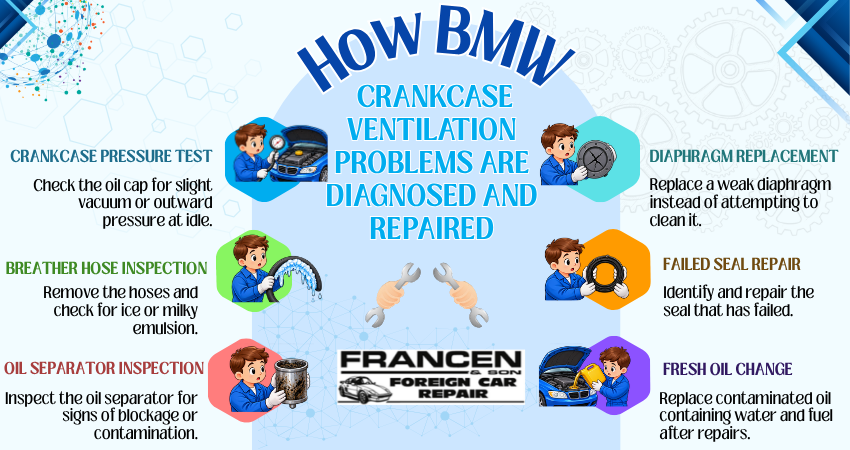
The first thing worth measuring is crankcase pressure, and the cheapest version of that test costs nothing: with the engine idling, a technician lifts the oil filler cap. A healthy engine pulls slight vacuum and the cap tries to stay put. An engine with a blocked vent pushes back, sometimes hard enough to lift the cap on its own.
From there the work is physical. The breather hoses come off and get checked for ice and for the mayonnaise-colored emulsion that shows how much water has been living in there. The oil separator gets inspected, and on engines where the diaphragm is a known weak point it gets replaced, not cleaned. Then the seal that actually failed gets dealt with.
Fresh oil belongs at the end of that job, because the oil in the pan has been diluted with water and fuel all winter and is part of why the sludge formed.
Keeping it from happening next winter
One longer drive every week or two is the whole prevention program. Twenty minutes at highway speed on Route 31 or I-90 gets the oil hot enough to evaporate the water that short trips keep depositing, and a dry crankcase has nothing in it to freeze.
The second thing is to stop stretching the oil interval through the months you drive least. Mileage-based intervals assume the miles are doing some of the work for you. A winter of cold, short runs is harder on oil than the odometer admits, and oil that is already carrying water and fuel contributes to the blockage instead of resisting it.
Frequently Asked Questions
Q: Can a frozen breather damage the engine, or is it only a leak?
A: Both are possible. Most cars get away with a pushed-out seal, but sustained crankcase pressure can force oil into the intake tract and, on a turbocharged engine, past the turbo seals.
Q: Will an engine block heater prevent it?
A: It helps the start, and it does nothing for a breather hose that froze while the car sat all night. Longer drives are the fix that works.
Q: My oil cap has a cream-colored film. Is that the same problem?
A: It is the same water, caught earlier. Film on the cap alone is condensation from short trips, and it is worth correcting before it becomes an ice plug.
What an Algonquin Breather Check Involves
If your BMW has started leaking where it never did, the first measurement is crankcase pressure. Nobody should be quoting you a seal before that number exists.
Francen & Son Foreign Car Repair — 1650 E Algonquin Rd, Algonquin, IL 60102