 Mon-Fri: 8:00AM – 5:00PM
 1650 E Algonquin Rd. Algonquin, IL 60102
 (847) 658-9500

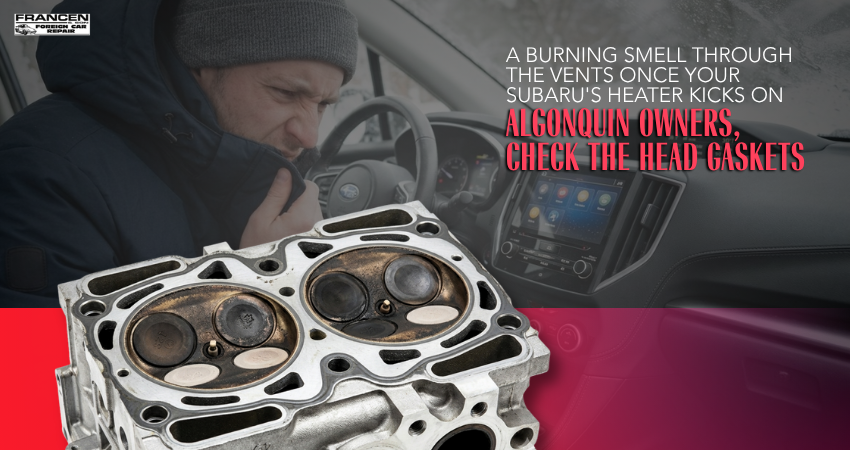
A burning-oil smell that drifts out of the vents only after the heater starts running is one of the earliest signs of a Subaru head gasket seep. Oil or coolant works out of the gasket seam, lands on hot exhaust and cooks. In Algonquin that smell tends to show up in November, when the windows stay shut and the fan runs on every trip. It won’t fix itself. Find the source while it’s still a seep, before deep-winter cold starts put the most strain on a tired seal.
Quick Summary: Key Takeaways
- Why it smells: the cylinder heads sit out on each side of a Subaru engine, so a seep can drip onto the exhaust and burn.
- Why November: the heater fan pulls outside air in at the cowl, and engine-bay smoke comes with it.
- Oil or coolant: acrid and oily means oil; sweet and syrupy means coolant.
- Stop driving if: the gauge climbs, the coolant tank bubbles, or white smoke from the tailpipe smells sweet.
A Subaru Head Gasket Leak Often Shows Up as a Smell Before a Puddle
On a Subaru, a small external head gasket leak usually reaches your nose long before it marks the garage floor. The reason is the layout. Subaru’s own explainer on its BOXER engine puts the cylinders on opposite sides of the crankshaft, pointing at each other, so each cylinder head sits out at the side rather than on top.
Each gasket seam therefore faces sideways, with the exhaust running underneath, and a slow oil or coolant seep can trickle down the head and onto pipes hot enough to smoke it off before a single drop ever reaches the ground.
Why the Smell Arrives With the First Cold Nights in McHenry County
The smell seems to start with the heater because cold weather means the fan pulls in outside air on every trip, with the windows shut. The National Weather Service’s Chicago office puts the normal first fall freeze at October 13 in Rockford and October 19 at O’Hare, based on 1991–2020 data. Algonquin sits between them. By November, freezing nights are routine.
So the fan runs the whole drive, and each red light on Randall Road gives engine-bay smoke time to rise toward the cowl at the base of the windshield. Try one test. Press the recirculate button for a few minutes; if the smell fades, it’s coming from outside the cabin rather than from the heater core behind the dash.
Oil or Coolant: What the Smell Is Telling You
Burning oil smells sharp and acrid, like a pan left on a hot burner. Coolant is sweet.
That decides your timing. An oil seep is usually slow and external, the kind of repair you can schedule for next week, while coolant loss means the engine is running short of the fluid that stops it from overheating. A sweet smell with fogged glass or a damp passenger floor points to the heater core instead. Check the reservoir cold, mark the level with tape, and look again after a week of driving around Algonquin and Lake in the Hills.
Rule Out the Cheaper Seals Before Anyone Quotes Head Gaskets
Not every burning smell on a Subaru is a head gasket. The valve cover gaskets seal the outer end of each head, and when they harden they drip onto the same exhaust for a fraction of the repair bill. Ask for proof. The area should be cleaned, the car driven, and the freshly wet seam identified before anyone writes up a quote.
Internal failure is worse. Overheating, bubbles rising in the coolant tank, milky oil on the dipstick or sweet white exhaust all point to a gasket that has failed inside the engine, and at that point the car needs to stay parked until it’s towed.
What a Subaru Head Gasket Repair Actually Involves
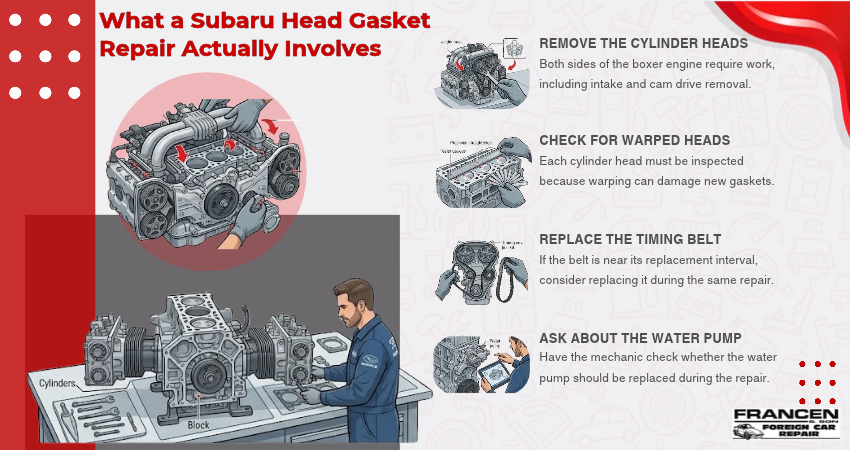
Replacing a head gasket means taking the cylinder heads off. On a boxer that’s work on both sides of the engine, with the intake manifold and cam drive removed first. Then each head is checked for warp. Warped heads ruin new gaskets.
Plan the timing. On Subaru engines that use a timing belt, the belt has to come off to free the heads. If yours is close to its replacement interval, have the new belt fitted during the same visit, because the labor to reach it is already on the bill and paying twice makes no sense. Ask about the water pump.
Why Algonquin Subaru Owners Bring It to Francen & Son
Francen & Son has repaired foreign cars in Algonquin since 1989, and its Subaru page puts head gasket replacement first on its list of the most frequent Subaru repairs. ASE-certified technicians do the work.
Free loaner cars and a local shuttle cover the days the Subaru is apart, and repairs carry a 12-month/12,000-mile warranty whether you live in town or drive over from Crystal Lake, Huntley or Barrington.
Frequently Asked Questions
Q: How do I know if my Subaru head gasket is leaking?
A: Watch for a burning-oil smell once the engine is warm, oily residue along the lower edge of either cylinder head, or a coolant level that keeps dropping. A technician confirms it by cleaning the area and finding which seam is wet after a drive.
Q: Can you drive a Subaru with a leaking head gasket?
A: A small external oil seep is usually fine for a short time while you book the repair. Coolant is different. Loss of it, a rising temperature gauge or bubbles in the coolant tank mean the car should be towed, because overheating can warp the heads.
Q: Why does my car smell like burning oil when the heater is on?
A: The heater draws outside air in at the cowl, so smoke from oil burning off the exhaust gets pulled into the cabin. On a Subaru, a valve cover gasket and a head gasket seep are the two leaks to check first.
Get the Smell Traced Before Deep Winter
Three notes save the technician time: when the smell starts, whether recirculate mode clears it, and what the tape mark on your coolant tank showed after a week. Write them down. Then add them to the appointment form on francenandson.com and ask about a loaner in case the heads have to come off. If the coolant mark keeps dropping, don’t drive it to 1650 E Algonquin Rd, Algonquin, IL 60102 at all; have it brought in.