 Mon-Fri: 8:00AM – 5:00PM
 1650 E Algonquin Rd. Algonquin, IL 60102
 (847) 658-9500
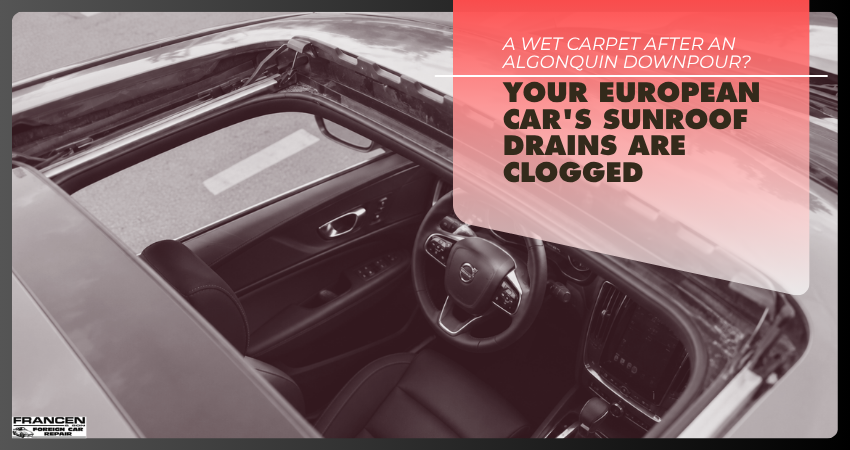
A summer storm rolls up the Fox River, dumps an inch on Algonquin in twenty minutes, and a few days later your carpet is damp and the car smells musty. Most owners blame a leak in the roof. Usually it’s the opposite: the sunroof is doing its job, but the drains that carry the water away are clogged.
Every sunroof lets a little water in by design, and four small tubes route it out under the car. Plug those with pollen and debris — which summer in McHenry County produces in bulk — and the water backs up into the cabin instead. Left alone, it ruins carpet, wiring, and control modules. Catch it early, and it’s a five-minute cleaning.
Quick Summary: Key Takeaways
- Sunroofs are meant to leak a little: Four drain tubes carry that water out; clogged tubes send it into the cabin.
- Summer debris is the trigger: Pollen, seeds, and leaf grit from Algonquin’s storms pack the drains fast.
- A musty smell is clue one: Damp carpet, foggy windows, or a wet headliner point to backed-up drains, not a roof leak.
- Water kills electronics: Modules under the seats and carpet corrode when footwells flood — an expensive gremlin.
- Prevention is cheap: Clearing the drains takes minutes; the water damage they prevent does not.
Your Sunroof Is Supposed to Let a Little Water In
This surprises people every time. A sunroof isn’t a sealed hatch — it’s a panel with a tray underneath that catches the rain slipping past the rubber, and four small drain tubes run from that tray down the pillars and out beneath the car where you never see them. Working right, you’d never know.
The system only fails when the tubes clog. Then the tray overflows. The water has nowhere to go but down into the headliner and onto your floor.
Algonquin’s Summer Storms Pack the Drains With Debris
Summer is the worst season for this. Pop-up thunderstorms off the Fox River drop heavy, fast rain, and the same warm months fill the air with pollen, seed pods, and grit from the trees along Route 31 and Algonquin Road. That debris settles into the tray and works its way in.
Park under trees and it happens faster. Much faster. The drain tubes are barely wider than a coffee stirrer, so a wad of wet pollen and a few seed pods is all it takes to block one completely for the rest of the season.
The Warning Signs Rarely Look Like a Leak
You won’t see water dripping from the ceiling. That’s the trap. Instead, the clues are indirect: a musty, mildewy smell, windows that fog on humid mornings, a damp spot in the footwell, or a headliner that feels soft near a corner. Many owners chase that smell for weeks before anyone thinks to check the drains.
Do this quick test. Pour a little water into the corner of the open sunroof tray and watch under the car for it to run out. Nothing comes out? The drains are blocked.

Standing Water Wrecks Wiring and Modules, Not Just Carpet
This is why it matters. European cars from Audi, BMW, Mercedes, MINI, and VW tuck control modules and connectors under the seats and carpet, right where sunroof water pools. Soak them and you get corrosion, false fault codes, and electrical problems that are maddening to trace and costly to fix.
A wet carpet also grows mold and rusts the floor pan from the inside. What started as a plugged tube becomes a repair bill with several zeros. AAA expected to rescue 7.7 million drivers over the summer of 2025, and a water-shorted electrical system is its own kind of roadside headache.
How We Clear and Check Sunroof Drains the Right Way
We don’t jam a wire down the tubes — that can pop a hose off inside the pillar and make the flooding worse. We flush the drains gently with low-pressure air and water, confirm flow out all four exits, and check where any water has already collected. If a module or connector got wet, we find it before it fails.
We’ve kept European and Japanese cars dry in Algonquin since 1989. That’s a long time. If your carpet is damp or the cabin smells off after one of these summer storms, bring it in, and we’ll trace the water back to its actual source instead of guessing at it.

Frequently Asked Questions
Q: Why is my car’s carpet wet after it rains?
A: On most European cars with a sunroof, a wet carpet after rain means the sunroof drain tubes are clogged. The sunroof tray fills with water it can’t drain, so it overflows into the headliner and down onto the floor. It looks like a roof leak, but it’s a drainage problem.
Q: How do I know if my sunroof drains are clogged?
A: Pour a small amount of water into the corners of the open sunroof tray and watch under the car for it to drain out. If little or no water exits, the tubes are blocked. A musty smell, foggy windows, or a damp footwell are also common early signs.
Q: Can a clogged sunroof drain cause electrical problems?
A: Yes, and that’s the real danger. Many European cars house control modules and wiring connectors under the seats and carpet, exactly where overflowing sunroof water collects. Soaked electronics corrode and trigger faults that are expensive to diagnose, so it’s worth clearing drains before water reaches them.
Q: How often should sunroof drains be cleaned?
A: Checking them once or twice a year is smart, especially if you park under trees or after a heavy pollen season. It’s a quick job that prevents water damage costing far more than the cleaning, and it’s easy to fold into a regular service visit.
Smell Something Musty After a Storm? Let Us Check the Drains
A damp cabin only gets worse and more expensive. Bring your car in, and we’ll find where the water is getting in.
Francen & Son Foreign Car Repair — 1650 E Algonquin Rd, Algonquin, IL 60102
Hours: Monday–Friday 8:00 AM – 5:00 PM; Saturday–Sunday closed
Website: francenandson.com