 Mon-Fri: 8:00AM – 5:00PM
 1650 E Algonquin Rd. Algonquin, IL 60102
 (847) 658-9500
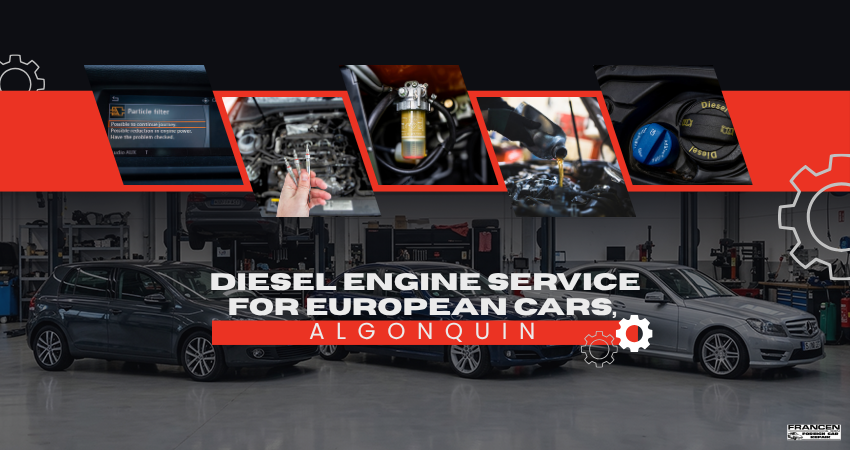
A European diesel is a different animal than a gas engine, and it needs a shop that knows the difference. If your VW TDI won’t clear a DPF light, your BMW 335d is down on power, or your Mercedes CDI is hard to start on a cold Algonquin morning, those are diesel-specific problems. Guess-and-swap repairs get expensive quickly.
Diesels earn their keep at the pump. The U.S. Department of Energy notes that diesel engines are typically 30 to 35 percent more fuel-efficient than comparable gasoline engines, which is a big reason owners hang onto them for years. That efficiency depends on the fuel, glow, and emissions systems all working, and those are the parts that need a specialist.
Quick Summary: Key Takeaways
- DPF trouble: Short trips around Algonquin keep the diesel particulate filter from regenerating, and a clogged DPF triggers limp mode.
- Glow plugs first: Hard cold starts before an Illinois winter usually trace to worn glow plugs, not the battery.
- Fuel filter matters: European diesels use a water-separating fuel filter that needs changing every 20,000 to 40,000 miles.
- Right oil only: TDI and CDI engines require low-ash, diesel-spec oil (ACEA C3/LL-04), and the wrong oil ruins the DPF.
- AdBlue system: Newer BlueTEC and TDI models use DEF and NOx sensors that fault and put the car in a no-start countdown.
European diesels need service built around fuel and emissions systems
Diesel service isn’t just an oil change with different oil. These engines, the VW and Audi 2.0 TDI, BMW’s 3.0-liter M57 and N57, and the Mercedes OM642 and OM651, run high-pressure fuel systems, glow plugs, and emissions hardware that gas cars simply don’t have. That’s the core difference. A proper diesel visit checks the fuel filter and water separator, tests the glow plugs, reads the DPF’s soot load, and scans the EGR and SCR systems, because skipping any of those means driving on borrowed time. We build every diesel appointment around them.
Warning lights and limp mode are the diesel’s cry for help
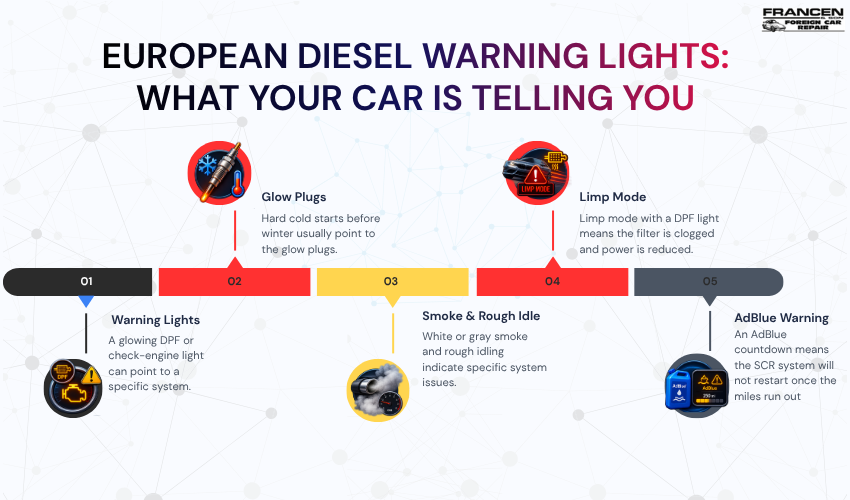
When a European diesel acts up it usually tells you in obvious ways. A glowing DPF or check-engine light, a sudden loss of power, rough idling, white or gray smoke, or a hard cold start each point to a specific system. Hard starts before winter? Usually the glow plugs. Limp mode with a DPF light means the filter is clogged and the car cut power to protect itself, and an AdBlue warning with a countdown is the SCR system telling you it will not restart once the miles run out. That one is not a suggestion.
Most diesel failures start with fuel, soot, or the DEF system
Three culprits cause the bulk of what we see. First, fuel: water in the tank or a tired high-pressure injection pump, and the Bosch CP4 is a known weak point on these engines, can starve the injectors and leave you stranded. Second, soot: lots of short trips around Randall Road never let the DPF get hot enough to burn off its load, so it clogs. Third, emissions: EGR valves gum up and DEF or NOx sensors fail. Cold matters too. Algonquin winters gel untreated diesel and expose weak glow plugs long before spring.
Deferring diesel service costs far more than the service itself
Put bluntly, a neglected DPF is one of the most expensive lessons in European diesel ownership. A forced regeneration or a professional filter clean might run a few hundred dollars, but a full DPF replacement on a BMW or Mercedes diesel can climb well past $2,000. The same goes for injectors and the CP4 pump. Small problems snowball. A leaking injector washes down a cylinder and a failing pump can send metal through the whole fuel system, so catching it early means you replace a $60 filter instead of the injection system.
Our Algonquin shop has serviced foreign diesels since 1989
Francen & Son has worked on European cars in Algonquin since 1989, and diesels are part of that story. Our ASE-certified techs read manufacturer data, run a Hunter alignment rack, and test the actual systems before recommending work, with no guesswork billed to you. We back repairs with a 12-month/12,000-mile warranty, and free loaner cars keep you moving while your car sits in the bay off East Algonquin Road. Straight answers. If a DPF can be cleaned instead of replaced, we’ll tell you and show you the soot numbers to prove it.
Frequently Asked Questions
Q: Why is my VW TDI in limp mode?
A: Limp mode on a TDI usually means the DPF is clogged or the car found an emissions fault and cut power to protect the engine. A scan reads the soot load and the exact code so we know whether a regen, a clean, or a repair is needed.
Q: How often should a European diesel be serviced?
A: Plan on an oil change with diesel-spec oil about every 10,000 miles, a fuel filter every 20,000 to 40,000 miles, and a full system check yearly. Cars driven mostly on short trips around Algonquin need the DPF watched more closely.
Q: What does the AdBlue warning mean on my Mercedes?
A: It means the DEF (diesel exhaust fluid) is low or the SCR system has a fault. Ignore it and the car will eventually refuse to start once the countdown hits zero. Get the level and the NOx sensors checked before that happens.
Q: Can you fix a clogged diesel particulate filter?
A: Often, yes. If the filter isn’t cracked or ash-loaded past its limit, we can run a forced regeneration or a professional clean instead of replacing it, which saves you thousands. We check its condition first and give you honest numbers.
Book diesel service before the cold sets in
Running a European diesel around Algonquin or McHenry County? Get the fuel, glow, and emissions systems checked before winter tests them. Schedule a repair online and we’ll take it from there.
Hours: Mon–Fri 8:00 AM–5:00 PM; Sat–Sun Closed
Website: francenandson.com